
0.3 C
New York
Monday, February 16, 2026
Home Blog Page 171

Zelenskyy identifies territorial concessions as Ukraine’s primary challenge, says Border Disputes News.

0

Ukrainian President Volodymyr Zelenskyy has said that protecting Ukraine’s territorial integrity remains the “biggest challenge” in ongoing negotiations over a US plan to end the war, following discussions in Paris with European and US officials.

Speaking alongside French President Emmanuel Macron at a joint news conference on Monday, Zelenskyy said Ukraine’s priorities include security guarantees, sovereignty and preventing concessions that would legitimise Moscow’s occupation of Ukrainian land.

Recommended Stories

list of 4 itemsend of list

“Our biggest challenge is the territorial issue,” he said, urging partners to avoid any outcome that “rewards the war it [Russia] started”.

The comments came as officials from France, Germany, Italy, Poland and the United Kingdom joined discussions in Paris, holding calls with US special envoy Steve Witkoff as part of an intensifying diplomatic push to end the war, which Russia launched with its full-scale invasion in February 2022.

Zelenskyy said the meeting also reviewed the substance of talks held a day earlier between Ukrainian and American officials in the United States, adding that more meetings are being prepared across Europe.

Macron reiterated that “Ukraine must be the one to decide its own territorial boundaries”, while signalling that further discussions are planned between Washington and European allies on potential security guarantees for Ukraine should a deal to end the war emerge.

Italian Prime Minister Giorgia Meloni also emphasised the need for unity between Europe and the US on a pathway towards peace. In a statement, she praised Zelenskyy’s “consistently constructive approach” and said she hoped Russia would “offer its own concrete contribution” to future talks.

Territorial question deepens diplomatic tensions

The territorial issue is shaping up to be the most sensitive point in negotiations, as Witkoff and US President Donald Trump’s son-in-law, Jared Kushner, prepare to meet Russian President Vladimir Putin on Tuesday.

Zelenskyy has said he hopes to speak with Trump after those talks. But Ukrainian officials have already told the US that Kyiv will not accept any settlement requiring it to cede territory.

“We told the American side that it is unacceptable for Russia to continue its occupation of our territory and then demand that we grant it legitimacy,” Zelenskyy’s adviser, Rustem Umerov, told Al Jazeera Arabic. “Giving up our territory means that international law no longer exists and that any party can use force to abolish the sovereignty of another party.”

Umerov said security guarantees remain a delicate part of discussions, because “we are seeking security for both Europe and Ukraine”. He added that negotiations will be “extremely difficult” if Russia genuinely engages, arguing that Moscow still believes “continuing the war is less costly than ending it”.

Reporting from Brussels, Al Jazeera’s Hashem Ahelbarra said that European Union leaders are insisting that no major concessions be made to Russia, and that “instead of handing over territory, there need to be land swaps that can only be decided by the Ukrainian people”.

It comes after a draft US plan was leaked to the press in mid-November, prompting criticism in Ukraine and among its European allies, who said the document heavily favoured Moscow.

The plan had proposed to limit Ukraine’s army strength to 600,000 men, with no mention of any cap on Russia. It also barred Kyiv from ever joining NATO, and included plans for Moscow to keep captured Ukrainian territories.

Russian strikes hit Dnipro

As diplomatic efforts accelerate, Ukraine suffered another deadly attack earlier on Monday. Local officials said at least four people were killed in a Russian missile strike on the central city of Dnipro.

Interfax reported that injuries have risen to 43, citing Vladyslav Haivanenko, the acting head of the Dnipropetrovsk Regional Military Administration. He said 10 people were in serious condition. The strike damaged an administrative building, several businesses, four educational institutions, multiple high-rise buildings, two service stations and more than 50 vehicles.

Dnipro, located about 100km (62 miles) from the front line and home to nearly one million people before the war, is frequently targeted by Russian bombardments.

Russia’s Ministry of Defence said its forces had “liberated” the settlement of Klynove in Ukraine’s Donetsk region, claiming it had advanced deep into Ukrainian positions. However, the Ukrainian army has refuted these claims.

Moscow said Ukraine lost about 1,415 troops across the front over the past 24 hours. Kyiv, meanwhile, reported eliminating 1,060 Russian troops, one tank, six armoured vehicles, 14 artillery systems, 239 drones and 71 vehicles in the same period.

Al Jazeera could not independently verify either side’s battlefield claims.

App control moves off your screen with modular command center

0

With all the technology in our lives today, it can feel overwhelming trying to keep track of the apps we need to control the world around us. Chinese tech company UltraBar has spent the past few years searching for a way to reduce this digital clutter, and it’s come up with an interesting solution – a modular system of smart blocks that lets you control everything at once.

UltraBar X is designed to serve as a “co-pilot,” saving you from constantly moving your cursor around the screen, searching for apps, and diving into menus and settings. The creators promise it will free up 60% of the space on your desktop. The project was launched on Kickstarter and has already reached its funding goal.

We’ve seen similar devices before, but they typically serve only as computer accessories, meaning they rely entirely on the computer’s software. Once computer is off, they become useless. UltraBar X is different as it runs on its own operating system – LineOS – and can work independently.

The UltraBar X modules include (from left) the KnobKey, CoreBar, DotKey and VivoCube

UltraBar

The device consists of several elements, with the CoreBar being the main one. It weighs 250 grams (8.82 oz) and measures 199 x 50.4 x 59.6 mm (7.83 x 1.98 x 2.35 in). It features a speaker and a 7-inch LCD touchscreen that can display CPU load, memory usage, time, weather, music playback, your favorite apps … you name it. But it’s not just a display – it’s a central hub that connects to your computer via USB-C and holds all the other elements together.

The additional modules – VivoCube, DotKey, SenseCube, and KnobKey – assemble into a single device by snapping together like Lego pieces. Each magnetic module weighs about 100 grams (3.5 oz), is easy to program through a mobile or desktop app, and can be arranged in any order you need.

Let’s look into what each element does.

A Kickstarter pledge of $469 is required for a full setup

UltraBar

VivoCube features a 2-inch AMOLED touchscreen that responds to taps and gestures. It has its own battery and connects to the CoreBar via Wi-Fi, which allows it to serve as a secondary display or a standalone controller. One touch can turn your monitor on and off, launch apps, or activate an entire personalized workflow by starting a few programs at once. You can open both Photoshop and Illustrator with a single tap, or instantly launch Zoom, Excel, and your browser just before a work meeting.

The creators also promise that a future AI engine will learn and predict your habits, automatically switching between the scenarios at a certain time. If you always finish work at 5 pm, for example, the system will close Teams, turn off your monitor, and start your evening playlist without you even touching a button.

The SenseCube module gets snapped on magnetically, just like the others

UltraBar

SenseCube includes multiple sensors for temperature, light, and humidity, and responds when you tap the surface it’s placed on. Tapping can be programmed to set an alarm, play music, save a document, or mute your microphone. This module can also detect when you approach your computer and turn it on automatically, turn it off when you leave the desk, or remind you to take a break if you’ve been sitting still for too long.

DotKey looks the simplest of all three modules, featuring three programmable buttons. You can assign them to skip tracks, open apps, copy/paste, delete/save files, or perform any other quick command.

And finally, KnobKey has a rotary dial, designed for adjusting volume, screen brightness, AC temperature, or even brush size in Photoshop.

UltraBar X can be used without a computer

UltraBar

UltraBar X is compatible with Windows, iOS, Android, and doesn’t require any driver installation. Linux and macOS support are expected soon. Besides working with a computer, each cube can also connect to smart-home devices via Wi-Fi or Bluetooth. Instead of searching for different control apps on your phone, you can open your curtains with a tap on the Vivo Cube or dim the lights by twisting the KnobKey. UltraBar X already supports 90 platforms through its build-in app store, and the creators are working to expand this number.

If four modules don’t seem like enough to organize everything, you actually can connect up to 15 modules to the CoreBar and up to three to an independent VivoCube. At that point, the only unsolved problem will be remembering which block does what.

For now, UltraBar X modules come in green, gold, and black color choices, with more options planned in the future. You can mix and match them in any combination. The CoreBar and all four modules will cost US$469 for Kickstarter backers, which is 30% off the expected retail price. The basic set includes the CoreBar, DotKey, and KnobKey and will cost $269 for early-bird backers or $429 for regular orders.

Assuming the Kickstarter campaign is successful and everything stays on schedule, mass production and shipping will begin in April 2026.

UltraBar X: Modular. Smart. Your Desktop Command Center

Source: Kickstarter

Note: New Atlas may earn commission from purchases made via links.

Warner Music Group’s CEO, Robert Kyncl, signs a new contract

0

Almost three years after he first took the reins as CEO, Robert Kyncl has signed a new deal at Warner Music Group.

Details were revealed in a document filed today (December 1) with the U.S. Securities & Exchange Commission (SEC).

According to the SEC filing, Kyncl and Warner agreed on an amendment to Kyncl’s employment package on Monday last week (November 24).

The new package is tied to the company’s share price performance. It sees Kyncl receive a grant of stock options worth USD $10 million, split into three equal tranches.

Each of these tranches only becomes exercisable if Warner’s stock exceeds a price level equivalent to a total shareholder return of 8%, 10%, or 12%, respectively, for at least 20 consecutive trading days within the next three years.

The new deal also introduces a new $5 million annual PSU (Performance Stock Unit) grant, starting in January 2026, vesting after three years based on financial targets.

Elsewhere in the package, Kyncl’s severance terms have changed. Under the new deal, his severance (without “cause”) will equal one year’s total target compensation plus 12 months of health coverage, plus a pro-rata annual bonus for the year of termination.

“All other terms of Mr. Kyncl’s employment remain unchanged from their previously disclosed terms,” said Warner’s SEC filing.

During Kyncl’s tenure thus far, the company’s annual revenue has risen from USD $5.92 billion in fiscal 2022 to USD $6.71 billion in fiscal year 2025.

Warner’s latest quarterly earnings showed an 8.4% YoY increase in the key metric of recorded music subscription streaming revenues (at constant currency, omitting the impact of BMG‘s deal termination).

Speaking to investors following the announcement of those quarterly earnings (Warner’s Q4, calendar Q3), Kyncl struck an upbeat tone, saying “these results prove that our strategy is working”.

There’s no question it’s been a busy year for Kyncl and his management team.

Since July, WMG has also been preoccupied with a $300 million restructure, while Kyncl has led the company through its first big AI deals, and a raft of leadership changes, including a new Chief Technology Officer.

On a call with investors on November 20, Kyncl said: “We’ve taken major steps to optimize our organization to drive efficiency and effectiveness, all while re-accelerating growth and gaining market share.”

He pointed to two metrics specifically related to market share: “[In] the U.S., we’re up 0.6 percentage points over the prior-year quarter, according to Luminate. Globally, our share of the Spotify Top 200 has jumped by around 6 percentage points vs. fiscal 2024.”

Kyncl praised Warner Chappell, Atlantic, and Warner Records for being “hotter than ever” while hailing success “across geographies and genres”.

He told investors, “I’m truly grateful to our leadership team, our operators across the globe, and our amazing artists and songwriters for pushing WMG to new heights.”Music Business Worldwide

Zelensky describes Ukraine territory as the ‘most challenging’ issue, while US envoy gets ready to meet Putin

0

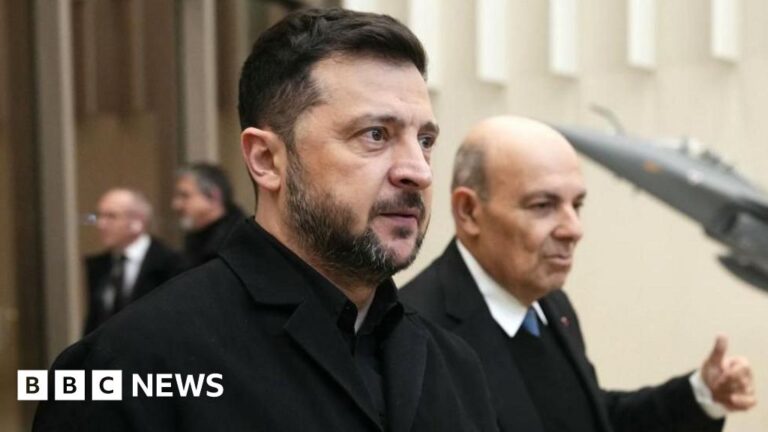
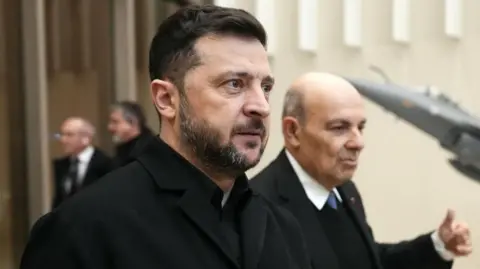
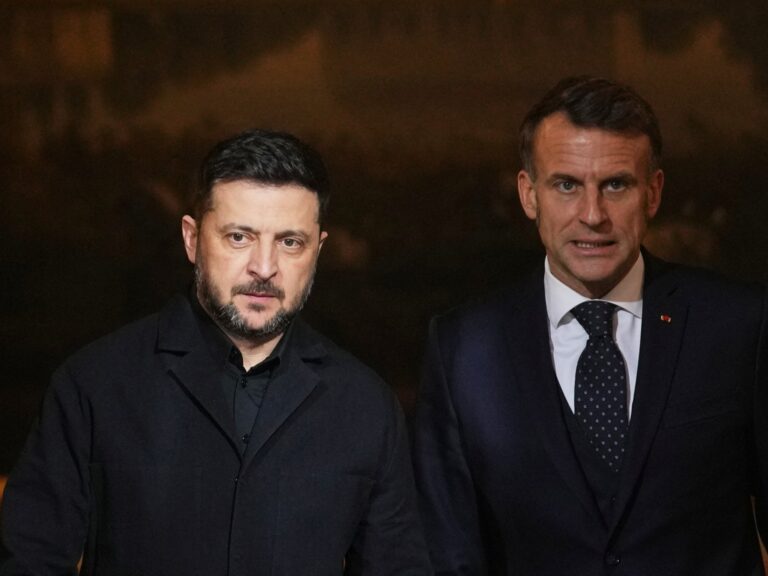
EPA/Shutterstock Ukrainian President Zelensky pictured in a black coat or jacket in Paris on 1 December. EPA/Shutterstock

President Zelensky has said Kyiv’s priorities in peace talks to end the war with Russia are maintaining Ukraine’s sovereignty and securing strong security guarantees.

Zelensky said “the territorial issue is the most difficult”, as Russia continues to demand that Ukraine give up areas of the eastern Donbas region that it still holds – which Kyiv maintains it will never do.

He was speaking after meeting French President Emmanuel Macron in Paris, where he joined a call with European leaders including those of the UK, Germany, Poland, and Italy.

Meanwhile, Ukrainian and US negotiators finished two days of meetings in Florida as they worked to revise a peace plan viewed as favouring Russia.

The White House struck a positive tone on the talks on Monday, with Press Secretary Karoline Leavitt saying the administration “feels very optimistic” about a deal being reached to end the war.

Zelensky was more circumspect, posting on X that the talks were “very constructive” but there are “some tough issues that still have to be worked through”.

US special envoy Steve Witkoff, who attended the talks with the Ukrainian delegation, is now bound for Russia where he will meet Russian President Vladimir Putin on Tuesday. They will be joined by President Trump’s son-in-law and adviser Jared Kushner.

Witkoff has spoken with Zelensky, Macron, Ukrainian chief negotiator Rustem Umerov, and UK Prime Minister Keir Starmer, and is expected to relay the result of the discussions to Putin.

Last week Putin said a draft peace plan had been shown by the Americans to Russia, and that it could become the “basis” for a future agreement to end the war.

The initial US-Russia draft peace plan circulated in November sparked consternation in Kyiv and around Europe.

As well as being heavily slanted towards Moscow’s demands, it also dictated how several billions’ worth of frozen Russian assets currently held in European financial institutions should be invested and dictated the terms of Kyiv’s access to EU markets.

But Macron said there was currently “no finalised peace plan to speak of”. He also insisted that any such proposal could only be worked out with input from Ukraine and Europe.

European leaders have been scrambled to get a seat at the negotiating table since the peace plan was leaked, and have urged the US to involve them in drafting any future agreement.

Macron said that the territorial question could “only be finalised by President Zelensky” and pointed out that issues of frozen Russian assets, security guarantees, and accession to the EU needed to involve European nations.

But the French leader also praised efforts by Donald Trump’s administration to end the conflict, which began in 2014 with Russia’s illegal annexation of Crimea and was followed by its full-scale invasion of Ukraine in 2022.

“Now we are waiting the Russian answer: are they ready to stop fighting and make peace? I want to point out that for three, four times the Russians have said no,” he added. “So they don’t seem in a rush.”

Throughout the year Moscow has appeared to engage with US attempts to end the war or discuss a ceasefire, but several of its demands directly counter Ukraine’s sovereignty and are seen as unacceptable by Kyiv.

While the question of territory is the major sticking point, the issue of security guarantees for Kyiv has also proved contentious.

Kyiv and its European partners are keen for Ukraine to be given security guarantees – such as Nato membership – that would protect it from being attacked again.

But Russia vehemently opposes this and Donald Trump too has ruled out allowing Ukraine to join the military alliance.

Away from the negotiating table, the war continues.

On Monday morning a Russian missile attack on the eastern Ukrainian city of Dnipro killed four people and injured 40, authorities have said.

Unconfirmed reports say a ballistic missile was used in the strike.

Videos shared online showed a large explosion occur on the side of a motorway, and local media said an office block, cars and shops were hit or badly damaged.

“We are trying to end this war with all our might and to end this war in a dignified manner,” Zelensky said in Paris.

“Russia must end this war that it started, it is its war and it is up to it to put an end to it.”

The latest diplomatic push comes as Zelensky is mired in a serious corruption scandal. His chief of staff Andriy Yermak, who had also led the Ukrainian delegation at peace talks, resigned on Friday after anti-corruption investigators raided his home – although he has not been accused of wrongdoing. Two cabinet ministers have also been fired.

On Sunday Trump told reporters on Air Force One that Ukraine had “some difficult little problems”, referring to the scandal, and repeated his view that both Russia and Ukraine wanted to end the war.

Challenging Clients

0


Client Challenge


JavaScript is disabled in your browser.

Please enable JavaScript to proceed.

A required part of this site couldn’t load. This may be due to a browser
extension, network issues, or browser settings. Please check your
connection, disable any ad blockers, or try using a different browser.

Officials Say Unsafe Netting Sheathing Hong Kong Towers

0

new video loaded: Hong Kong Towers Sheathed in Unsafe Netting, Officials Say

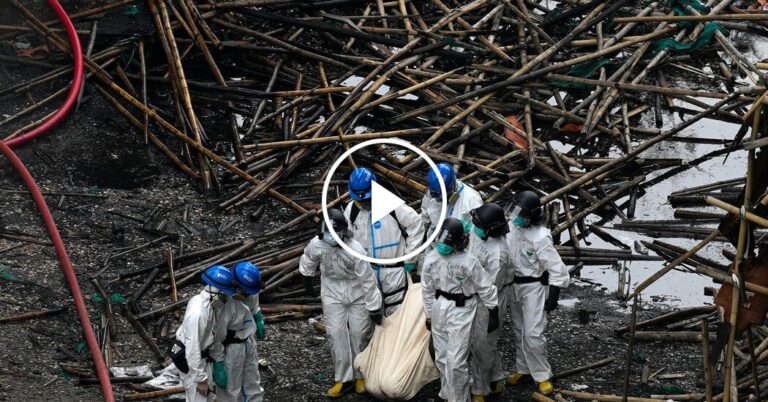
The netting that was used to shroud the Hong Kong housing estate that burned down last week had been replaced with cheaper material that did not meet fire safety standards months before the tragedy, officials said.

By Monika Cvorak

December 1, 2025

12 killed as Peru landslide sinks boats in Amazon region river

0


Peru landslide sinks boats in Amazon region river, killing 12

US and UK Reach Agreement on Zero Tariffs for Medicines; UK Commits to Increased Spending on Healthcare | International Trade Update

0

The spending increase will stay in place for at least the next three years.

The United States has announced a new trade deal with the United Kingdom that includes zero tariffs on pharmaceutical and medical products in exchange for the UK spending more on medicines, the first significant spending increase in more than 20 years, and overhauling how it values drugs.

As part of the deal announced on Monday, the state-run National Health Service (NHS) will spend 25 percent more on treatments for at least the next three years.

Recommended Stories

list of 4 itemsend of list

“The United States and the United Kingdom announce this negotiated outcome pricing for innovative pharmaceuticals, which will help drive investment and innovation in both countries,” US Trade Representative Jamieson Greer said in a statement.

The USTR statement said the UK would increase the net price it pays for new medicines by 25 percent under the deal. In exchange, UK-made medicines, drug ingredients and medical technology would be exempted from so-called Section 232 sectoral tariffs and any future Section 301 country tariffs.

Two sources familiar with the deal said it involved a major change in the value appraisal framework at the National Institute for Health and Care Excellence (NICE), a UK government body that determines whether new drugs are cost-effective for the NHS, the sources said.

NICE’s “quality-adjusted life year” measures the cost of a treatment for each healthy year it enables for a patient, with the upper threshold being 30,000 pounds ($39,789) per year.

US President Donald Trump has pressed the UK and the rest of Europe to pay more for US medicines, part of his push for their costs to be brought more in line with those paid in other wealthy nations.

The pharmaceutical industry has criticised a tough operating environment in the UK, and some big firms have cancelled or paused investment in the UK, including AstraZeneca, the largest on the London Stock Exchange by market value.

One point of contention between the sector and the government has been the operation of a voluntary pricing scheme, which sees firms put a proportion of sales to the NHS back into the health service.

The office of the USTR said the UK had committed that the rebate rate would decrease to 15 percent in 2026.

‘Cutting-edge medicines’

British science and technology minister, Liz Kendall, said on Monday a new pharmaceutical deal with the US will encourage life sciences companies to continue investing and innovating in the UK.

“This vital deal will ensure UK patients get the cutting-edge medicines they need sooner, and our world-leading UK firms keep developing the treatments that can change lives,” Kendall said in a statement.

“It will also enable and incentivise life sciences companies to continue to invest and innovate right here in the UK,” Kendall added.

Among those companies is Bristol Myers Squibb. The pharmaceutical giant’s CEO said it will be able to invest more than $500m over the next five years because of the deal.

On Wall Street, the stock, which is traded under the ticker symbol BMY, is down by 0.1 percent. Other heavily affected pharmaceutical companies include AstraZeneca, which was down by about 1 percent, and GSK, down by 0.4 percent.

After securing a $1 trillion pay package, Elon Musk acknowledges the challenges of philanthropy

0

Musk says it’s because philanthropy is difficult.

“I agree with love of humanity, and I think we should try to do things that help our fellow human beings,” he told Nikhil Kamath for the WTF podcast in an episode published Sunday. “But it’s very hard.”

Musk, who is on the path to become a trillionaire thanks to the approval of an historic pay package, says it’s “very difficult to give away money well.” 

“The biggest challenge I find with my foundation is trying to give money away in a way that is truly beneficial to people,” he added. “It’s very easy to give money away to get the appearance of goodness. It is very difficult to give money away for the reality of goodness. Very difficult.”

Although he claimed “I don’t want my name on anything,” his eponymous Musk Foundation was established in 2002. It largely supports many of Musk’s own personal interests, like renewable energy, human space exploration, pediatric research, and science and engineering education. 

A 2024 investigation by The New York Times called Musk’s philanthropy “haphazard and largely self-serving,” making him eligible for tax breaks and helping his own businesses, like SpaceX.

The Times gave the example of a $20 million donation to Cameron County schools in Texas after a SpaceX ship had blown up there, as well as $10 million to the city of Brownsville for downtown revitalization. Between 2020 and 2024, Musk seeded the charity with tax-deductible stock donations worth more than $7 billion at the time, according to the report.

Representatives for Musk didn’t immediately respond to Fortune’s request for comment.

How Elon Musk’s giving style compares to other billionaires

Arguably the biggest name in philanthropy this year has been MacKenzie Scott, the billionaire novelist and ex-wife of Amazon founder Jeff Bezos. Scott, who’s worth about $34 billion, has donated more than $19.25 billion since 2020—although her net worth continues to grow thanks to the power of Amazon shares she received upon her divorce. 

Scott has made several record-breaking donations this fall to HBCUs, disaster recovery organizations, and other education-related causes. Her philanthropic style is unique in that she typically makes unrestricted gifts, meaning recipients can use the funding however they choose without any strings attached. 

Warren Buffett, the billionaire investor who is retiring as Berkshire Hathaway CEO at the end of this year, announced he made the choice to leave his three kids $500 million a year to give away to continue his legacy of giving. In total, Buffett’s giving has reached more than $60 billion, much of which has gone to the Gates Foundation run by Microsoft founder Bill Gates and his ex-wife Melinda French Gates. Buffett had also previously signed The Giving Pledge to give away the majority of his fortune—a promise many have made but few have followed through on.

“Early on, I contemplated various grand philanthropic plans. Though I was stubborn, these did not prove feasible,” he wrote in a letter to shareholders released last month. “During my many years, I’ve also watched ill-conceived wealth transfers by political hacks, dynastic choices and, yes, inept or quirky philanthropists.”

The Gates Foundation also told Fortune first this summer it would shut down in 2045, and Bill Gates would give away “virtually all my wealth” to the foundation, which amounts to about $100 billion. Today, he is worth about $119 billion. Once the richest man in the world, Gates’ net worth took a $52 billion hit this summer after his donation announcement.

“People will say a lot of things about me when I die, but I am determined that ‘he died rich’ will not be one of them,” he wrote in a May 8 note. “There are too many urgent problems to solve for me to hold onto resources that could be used to help people.”

More than 500 people killed in Indonesia floods

0

Flora Druryand

BBC Indonesian

Watch: BBC reports from the site of deadly flooding in West Sumatra

The death toll in the floods which struck Indonesia last week has now climbed to more than 500, with rescue workers still battling to reach affected areas.

The floods, which were caused by a rare cyclone that had formed over the Malacca Strait, have hit three provinces and impacted some 1.4 million people, according to the government’s disaster agency.

Another 500 people remain missing, while thousands more have been injured.

Indonesia is just one part of Asia which has been hit with torrential rain and storms in recent days, with Thailand, Malaysia, and Sri Lanka all also reporting deaths.

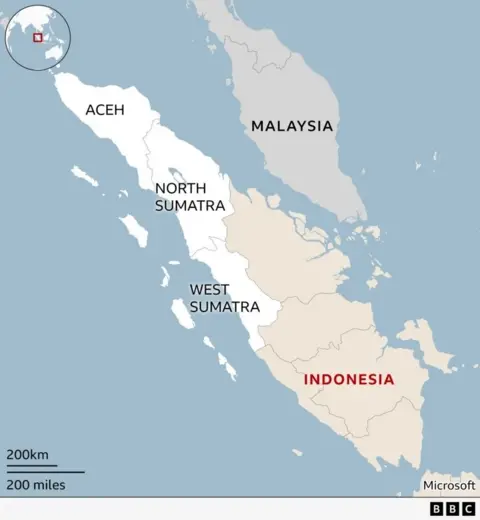
In Indonesia, the provinces of Aceh, North Sumatra and West Sumatra have been hardest hit, with thousands still cut off and without critical supplies.

Arini Amalia, a resident from Aceh’s Pidie Jaya Regency, told the BBC the flood waters had been “like a tsunami”.

“According to my grandmother, this is the worst, the worst in her life,” Amalia said.

Aid workers have been trying to reach people on foot and by motorcycle, as many roads are impassable to larger vehicles.

Pictures from the region show bridges washed away, roads covered in mud and debris, and logs piled high.

At West Sumatra’s Twin Bridges landmark, where flood waters swept through and deposited enormous amounts of mud and debris, Mariana watched as excavators cleared the roads, hoping they would find her missing family members including her 15-year-old son.

“Watching the excavators, seeing how thick the mud is… I keep thinking, what condition will my child be in when they find him?” she said.
”Will he still be intact?
My mother, my brother-in-law…
Looking at how it is here, maybe their faces won’t even be recognisable any more.”

Reuters Local residents inspect an area hit by deadly flash floods following heavy rains in Palembayan, Agam regency, West Sumatra province, Indonesia, December 1, 2025Reuters

The floods have impacted some 1.4 million people in Indonesia

Many are still waiting for food aid, with some saying they have not eaten for two to three days.

Maysanti, who lives in Central Tapanuli which is one of the worst-hit areas in North Sumatra, told the BBC that aid workers were having trouble reaching her district.

“Everything is gone; our food supplies are running out. We can’t eat,” she said. “Even instant noodles are being fought over now. Our food is gone; we need food and rice. Access to us is completely cut off.”

She said she has to walk kilometres away from her house to get an internet connection and basic necessities, like clean water.

In Central Aceh where local authorities have provided Starlink devices, thousands were seen queuing outside the regency’s office on Sunday night hoping to contact their loved ones or charge their mobile phones.

“It’s been five days with no signal. We’ve been waiting since yesterday in case the network comes back. I’m planning to call my mother in Banda Aceh, but until now I still can’t reach her,” said one resident called Mar.

A map of Indonesia showing the worst impaced provinces - Aceh, North Sumatra, and West Sumatra. Malaysia can be seen next to it

As rescue efforts continue, anger has started to grow towards the government’s disaster response.

Critics say that authorities were ill-prepared for the floods. Some have blamed bureaucratic red tape for slowing down the distribution of food aid.

On Monday, President Prabowo Subianto – who was visiting some of the flood affected areas in North Sumatra – acknowledged some roads were still cut off, but added “we’re doing everything we can to overcome difficulties”.

“We face this disaster with resilience and solidarity,” he continued. “Our nation is strong right now, able to overcome this.”

Reuters A drone view of vehicles driving through an area hit by deadly flash floods following heavy rains in Palembayan, Agam regency, West Sumatra province. The road cuts through fileds which appear to have been turned to mud, the houses are damaged. The area is surrounded by jungle, with a mountain in the background
Reuters

Rescue workers and aid are still struggling to reach some areas

Across South and South East Asia, about 1,100 people have been killed in the last week in flooding and landslides. In Sri Lanka, some 355 people died, while in Thailand the death toll has reached at least 176.

However, there is no single weather event that has caused the floods. Instead, a combination of weather features have been to blame.

According to BBC Weather, one element is the north-east monsoon, which affects East and South Asia from around November until March.

As the name suggests, it brings north-easterly winds, which deliver a lot of rain to coastal areas exposed to this monsoon flow as moisture is picked up from the ocean and deposited over land.

In Sri Lanka, the rainfall has been significantly enhanced by Cyclonic Storm Ditwah, which became very slow moving, delivering over half a metre of rain over a few days in some locations.

That storm has now weakened and moved away northwards to bring rain in south-east India, with the forecast for Sri Lanka looking much drier over the coming days.

In the Malay Peninsula, Sumatra and southern Thailand, Cyclonic Storm Senyar had a similar effect, enhancing the monsoon and delivering more than a metre of rain in some places. This was a particularly rare storm, forming unusually close to the equator where cyclones do not normally develop.

In Vietnam, the last few weeks have been exceptionally wet, with the monsoon rains having been enhanced by tropical cyclones. Now the remnants of ex-Typhoon Koto are drifting towards the Vietnamese coast, threatening more heavy downpours and further flooding.

It is likely that climate change has also had a part to play. While global warming is not expected to lead to more tropical storms and cyclones, those that do occur have the potential to be more intense – with heavier rainfall leading to more flooding.