
A required part of this site couldn’t load. This may be due to a browser
extension, network issues, or browser settings. Please check your
connection, disable any ad blockers, or try using a different browser.

A required part of this site couldn’t load. This may be due to a browser
extension, network issues, or browser settings. Please check your
connection, disable any ad blockers, or try using a different browser.
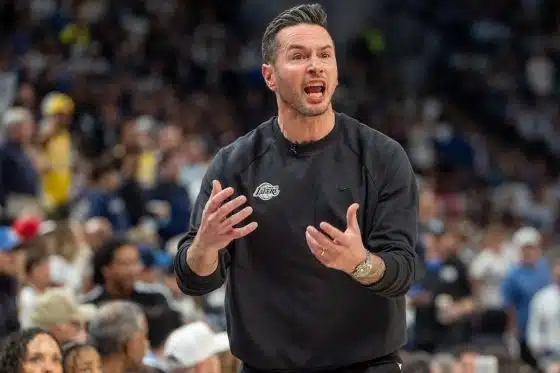
The Los Angeles Lakers escaped with a 116–114 win over the Phoenix Suns, but a late technical free throw created confusion. Head coach JJ Redick addressed the moment afterward and clarified what he expected to happen. The situation unfolded after Suns guard Dillon Brooks received his second technical foul and was ejected late in the fourth quarter.
Brooks had just hit a go-ahead three-pointer, briefly putting Phoenix in front. Officials assessed the technical immediately after the play. That ruling gave the Lakers one free throw with the game still hanging in the balance. Instead of the expected shooter, LeBron James walked to the line.
Redick said he believed Luka Dončić would take the technical free throw. The coach explained that Dončić had already been discussed as the preferred option. Dončić had shot the ball extremely well from the line earlier in the game. He finished the night making 13 of 14 free throws before the final sequence.
“I thought Luka was gonna shoot it,” Redick said after the game. “I walked back, LeBron was at the free-throw line and shot it. I don’t know what the dialogue was on the court. … Luka should’ve shot that.”
Redick added that these moments can unfold quickly. Teams usually designate a shooter, but players sometimes act on instinct. Veteran habits can also influence who steps forward in critical moments.
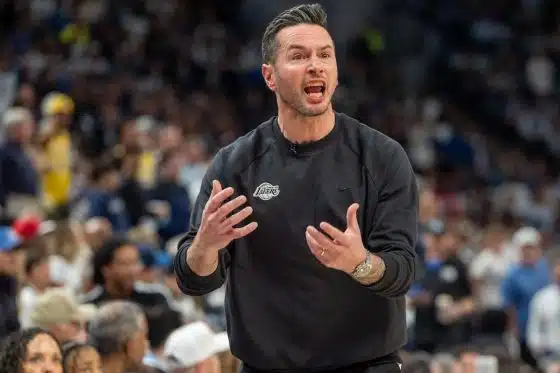
James missed the technical free throw, leaving the game tied. However, the moment did not define the finish. On the next possession, James attacked the basket and drew a foul. He calmly converted both free throws, giving the Lakers the lead for good.
James later explained that he did not overthink the situation. He said he simply went to the line and accepted the responsibility. The veteran forward also noted that he would have been comfortable if Dončić had taken the shot instead.
The sequence highlighted communication challenges during chaotic finishes. Redick’s comments showed that clarity matters most when pressure peaks. Despite the confusion, the Lakers executed well enough when it mattered most.
James’ late free throws sealed the win. Dončić’s earlier efficiency kept the team within reach. Even with a missed assignment, the Lakers demonstrated composure. That balance ultimately decided the game.

In the first long-term and real-world reflective study of its kind, scientists have uncovered new detrimental health impacts of the artificial sweetener aspartame that echoes those found in shorter research.
A research team led by Spain’s CIC biomaGUNE and Biogipuzkoa Health Research Institute undertook a year-long study into the effects of aspartame on the body, limiting the dosage to well below current Acceptable Daily Intake (ADI) guidelines. This experimental design was a deliberate effort to rule out two key limitations that hamper existing evidence: brief study periods and unrealistically high dosage levels.
While aspartame is one of the most studied food additives on the planet, short studies can show mechanistic impacts of aspartame but not long-term effects – and this is one reason why bodies like the World Health Organization (WHO), despite classing aspartame as “possibly carcinogenic to humans” in 2023, and the US Food and Drug Administration (FDA) have deemed it safe when consumed below the ADI threshold.
Here, the team exposed mice to 7 mg/kg (3.17 mg/lb) of body weight in human equivalent – around one-sixth of the maximum recommended daily intake – over the period of a year. Eighteen mice were given aspartame for three days every two weeks, alongside a no-dose control group of 14 animals.
“We are observing how nutrient modulation impacts organ function in sickness and in health, and in this case, we set out to determine the physiological impacts aspartame exerts on the hearts and brains of mice, as well as its effect on fat levels and body weight, in order to compare them with other types of sugars and sweeteners,” the researchers noted. “This dose is well below the maximum dose recommended by the World Health Organization, the EMA (European Medicines Agency) and the FDA (Food and Drug Administration), which is 50 mg/kg (22.7 mg/lb) per day.”
Over the course of the year-long experiment, the most significant changes were seen in how the brain processed energy. Using FDG-PET imaging, the researchers tracked glucose uptake across the whole brain as well as specific regions, and found that after only two months of intermittent aspartame intake, the mice had sharp rises here – roughly double that seen in the control group. And this effect was across the entire brain, suggesting it was burning more fuel in the early stages of the experiment. However, at around six months, this spike actually reversed, and at the 10-month mark, the brains of the aspartame-dosed mice were burning around 50% less glucose than the control group. Because the brain runs almost entirely on glucose – to fuel processes like the firing of neurons and maintaining circuits linked to memory and learning – aspartame appeared to be robbing the organ of what it needs to function smoothly.
In real-world terms, aspartame appeared to cause the brain to shift from an early state of heightened energy use to a more chronic state of underuse – which is a pattern often associated with metabolic strain, not adaptation.
Looking at things on a biochemical level, the researchers used magnetic resonance spectroscopy to examine metabolites in the cerebral cortex. Again, after two months, levels of N-acetylaspartate (NAA) – a marker of neuronal metabolism and function – were about 13% higher in the aspartame group. However, by four months, early positives again vanished and continued to worsen. At eight months, lactate levels were around 2.5 times higher in aspartame-treated mice, suggesting cellular dysfunction.
To fully understand the process you have to know the relationship between astrocytes – the star-shaped cells that convert glucose to lactate – and the neurons they support. Neurons are both energy hungry and bad at managing fuel, which is where astrocytes come in, converting glucose to easily-burned lactate to feed the nerve cells (the astrocyte-neuron lactate shuttle). However, when there’s a consistent high level of lactate, neurons can’t use it efficiently and it begins to accumulate, messing up the energy balance in the brain. Essentially, this puts the brain in “emergency mode,” making neural circuits less efficient, potentially slowing learning, reducing mental stamina and attention and making complex tasks harder.
When the researchers conducted spatial learning and memory tests using the Barnes maze, the aspartame mice at four months consistently moved more slowly and covered less distance during training than animals in the control group. They also took nearly twice as long on average to locate the target escape hole, showing impaired memory recall (however, this was inconsistent and not seen as statistically meaningful). By eight months, performance gaps widened even further, with two out of six aspartame-treated mice failing to complete the task at all.
Overall, long-term aspartame intake appeared to hamper the animals’ ability to follow through with problem-solving tasks, in line with the metabolic changes that the researchers had uncovered in the brain.
But it wasn’t just the brain that was affected. Cardiac imaging revealed significant changes in heart structure and function by the end of the study. The hearts of aspartame-treated mice didn’t pump as efficiently – the chambers emptied less completely and delivered less blood with each beat, even though there was little structural damage. Over time, that means organs – including the brain – received slightly less blood and oxygen.
The researchers also found that while aspartame-treated mice accumulated about 20% less total body fat than the control animals over the 12 months, this reduction didn’t translate into improved metabolic health. Despite similar body weights, fat distribution shifted over time, with a greater proportion of fat stored viscerally around the organs and less lean mass overall. This type of fat redistribution is known to place greater strain on the heart and metabolism, helping explain why reduced fat mass in these mice coincided with changes to the heart and brain energy use.
“Aspartame does indeed reduce fat deposits (by 20%) in mice, but it does so at the cost of mild cardiac hypertrophy and decreased cognitive performance,” the researchers confirmed. “Although this sweetener may help achieve weight loss in mice, it is accompanied by pathophysiological changes in the heart and, possibly, in the brain.”
The obvious limitation to the study is that the results are based on an animal model, and are yet to be demonstrated in humans. However, it highlights the importance of long-term experiments to further our understanding of chronic aspartame intake and how it might influence brain and heart metabolism.
Since its initial FDA approval in 1974, aspartame (L-aspartyl-L-phenylalanine methyl ester) has become one of the leading artificial sweeteners on the US market. Numerous studies have highlighted health concerns associated with it, including serious heart problems and learning and memory impairment.
The study was published in the journal Biomedicine & Pharmacotherapy.
Source: CIC biomaGUNE

Fighting has resumed hours before the countries’ foreign ministers meet in Malaysia to discuss steps to de-escalate hostilities.
Published On 22 Dec 2025

Asia shares extend gains, yen friendless as bonds buckle

Abu Bakar Yasinand
Naomi Clarke,BBC Newsbeat
 Getty Images
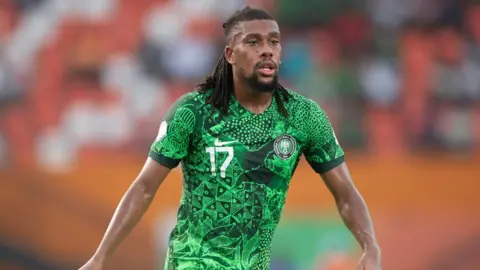
He’s played on some of the biggest stages in the world in the Premier League, but Alex Iwobi believes the Africa Cup of Nations (Afcon) is a “special” experience.
The tournament will see 24 teams battling for the continental crown across the next couple of weeks.
Fulham midfielder Iwobi will represent his home country of Nigeria in the competition, where they will be hoping to clinch the title after missing out in a 2-1 loss to Ivory Coast in 2023’s final.
“With Afcon, you get to celebrate Africa through football,” he tells BBC Newsbeat.
“You get to see different cultures, you get to see how different people dress, how people from Nigeria, the way we walk into the changing rooms.
“When some of the other countries walk into the changing rooms, we play music, so we’re celebrating our music through that as well.”
Nigeria will be hoping to redeem themselves after failing to qualify for a second successive World Cup.
Iwobi says it was a “big disappointment”, but the team will be using it to fuel them in the Afcon tournament.
“We owe it to ourselves to make it right, and there’s no better way from the last Afcon to improve (than) just to win this one,” the 29-year-old says.
Afcon is typically held every two years and this time Morocco is hosting.
Nigeria have won the competition three times over the years, the last being back in 2013.
Their most recent loss to Ivory Coast is still prominent in Iwobi’s mind as he says it “shattered” their dreams.
However, he feels the moment was “written” for striker Sébastien Haller, who scored the winning goal after overcoming testicular cancer.
“It was a tough loss, but you give credit when credit due, they deserved it,” Iwobi says.
“But it’s also fuelled us and we’ve been working hard to get into the Afcon again and, hopefully, this is our story.”
 Getty Images
The Fulham midfielder was born in Lagos, but moved to London as a child. His talent was spotted early and he was selected to represent England up to under-18 level.
After many years with the Three Lions, he made his debut for Nigeria’s national team in 2015 as he says he felt more “at home” with the team.
“England treated me with a lot of respect and they loved me,” he says. “But at the same time, I felt more of a connection with my roots in Nigeria.”
He has since made 91 appearances, making him the fourth most capped player for the Nigerian Super Eagles.
Iwobi says he never thought he would play for Arsenal, Fulham, or Nigeria growing up, but he is “honoured and grateful” for his achievements.
Ademola Lookman, Calvin Bassey and Iwobi’s school friend Ola Aina are also among the players on the Nigerian national team who were not raised in the country.
They have been affectionately nicknamed the “innit boys”, and Iwobi hopes they have helped open the door for others to represent their home country.
“You’re Nigerian at the end of the day and you will get loved regardless,” he says.
 Getty Images
There has been debate over whether Afcon gets the respect it deserves.
Earlier this year, Sky Sports pundit Jamie Carragher caused a stir when he suggested Afcon was not considered a “major tournament”, when discussing Mohamed Salah’s chances of winning the coveted Ballon d’Or.
Iwobi feels there is still more work to be done.
“It’s obviously getting recognised a lot more,” he says. “There’s a lot of great talents, great nations representing.
“In the Premier League there’s a lot of players in each team that are going to be represented so the awareness is growing, but it definitely deserves a lot more respect, in my opinion.”
If he wins the tournament, the Fulham player says he will be on the phone to his parents and sister straight away, while his extended family will be dancing.
“I’ve heard from previous people that when they win it, it’s like everything just stops, you become like a king, you’re just royalty,” he says.
“Just going to the final we got treated like royalty anyway, so I can’t imagine winning it.
“It would just be crazy, but I want to experience that.”


Vice President JD Vance said Sunday the conservative movement should be open to everyone as long as they “love America,” declining to condemn a streak of antisemitism that has divided the Republican Party and roiled the opening days of Turning Point USA’s annual convention.
After a long weekend of debates about whether the movement should exclude figures such as bigoted podcaster Nick Fuentes, Vance came down firmly against “purity tests.”
“I didn’t bring a list of conservatives to denounce or to de-platform,” Vance said during the convention’s closing speech.
Turning Point leader Erika Kirk, who took the helm after the assassination of her husband, Charlie Kirk, has endorsed Vance as a potential successor to President Donald Trump, a helpful nod from an influential group with an army of volunteers.
But the tension on display at the four-day gathering foreshadowed the treacherous political waters that Vance, or anyone else who seeks the next Republican presidential nomination, will need to navigate in the coming years. Top voices in the “Make America Great Again” movement are jockeying for influence as Republicans begin considering a future without Trump, and there is no clear path to holding his coalition together.
The Republican Party’s identity has been intertwined with Trump for a decade, but he’s constitutionally ineligible to run for reelection despite his musings about serving a third term. Tucker Carlson said people are wondering, “who gets the machinery when the president exits the scene?”
So far, it looks like settling that question will come with a lot of fighting among conservatives. The Turning Point conference featured arguments about antisemitism, Israel and environmental regulations, not to mention rivalries between leading commentators.
Ben Shapiro, co-founder of the conservative media outlet Daily Wire, used his speech on the conference’s opening night to denounce “charlatans who claim to speak in the name of principle but actually traffic in conspiracism and dishonesty.”
“These people are frauds and they are grifters and they do not deserve your time,” Shapiro said. He specifically called out Carlson for hosting Fuentes for a friendly interview on his podcast.
Carlson brushed off the criticism when he took the stage barely an hour later, and he said the idea of a Republican “civil war” was “totally fake.”
“There are people who are mad at JD Vance, and they’re stirring up a lot of this in order to make sure he doesn’t get the nomination,” he said. Carlson described Vance as “the one person” who subscribes to the “core idea of the Trump coalition,” which Carlson said was “America first.”
Turning Point spokesperson Andrew Kolvet framed the discord as a healthy debate about the future of the movement, an uncomfortable but necessary process of finding consensus.
“We’re not hive-minded commies,” he wrote on social media. “Let it play out.”
Vance acknowledged the controversies that dominated the Turning Point conference, but he did not define any boundaries for the conservative movement besides patriotism.
“We don’t care if you’re white or black, rich or poor, young or old, rural or urban, controversial or a little bit boring, or somewhere in between,” he said.
Vance didn’t name anyone, but his comments came in the midst of an increasingly contentious debate over whether the right should give a platform to commentators espousing antisemitic views, particularly Fuentes, whose followers see themselves as working to preserve America’s white, Christian identity. Fuentes has a growing audience, as does top-rated podcaster Candace Owens, who routinely shares antisemitic conspiracy theories.
“We have far more important work to do than canceling each other,” he said.
Vance ticked off what he said were the accomplishments of the administration as it approaches the one-year mark, noting its efforts at the border and on the economy. He emphasized efforts to end diversity, equity and inclusion policies, drawing applause by saying they had been relegated to the “dustbin of history.”
“In the United States of America, you don’t have to apologize for being white anymore,” he said.
Vance also said the U.S. “always will be a Christian nation,” adding that “Christianity is America’s creed, the shared moral language from the Revolution to the Civil War and beyond.”
Those comments resonated with Isaiah White-Diller, an 18 year-old from Yuma, Arizona, who said he would support Vance if he runs for president.
“I have my right to be Christian here, I have my right to say whatever I want,” White-Diller said.
Vance hasn’t disclosed his future plans, but Erika Kirk said Thursday that Turning Point wanted Vance “elected for 48 in the most resounding way possible.” The next president will be the 48th in U.S. history.
Turning Point is a major force on the right, with a nationwide volunteer network that can be especially helpful in early primary states, when candidates rely on grassroots energy to build momentum. In a surprise appearance, rapper Nicki Minaj spoke effusively about Trump and Vance.
Vance was close with Charlie Kirk, and they supported each other over the years. After Kirk’s assassination on a college campus in Utah, the vice president flew out on Air Force Two to collect Kirk’s remains and bring them home to Arizona. The vice president helped uniformed service members carry the casket to the plane.
Emily Meck, 18, from Pine City, New York, said she appreciated Vance making space for a wide variety of views.
“We are free-thinkers, we’re going to have these disagreements, we’re going to have our own thoughts,” Meck said.
Trump has spoken highly of both Vance and Secretary of State Marco Rubio as potential successors, even suggesting they could form a future Republican ticket. Rubio has said he would support Vance.
Asked in August whether Vance was the “heir apparent,” Trump said “most likely.”
“It’s too early, obviously, to talk about it, but certainly he’s doing a great job, and he would be probably favorite at this point,” he said.

Gaza’s Ministry of Health has appealed for increased drug, medical consumables and laboratory supplies, warning of severe shortages after more than two years of Israel’s genocidal war against the Palestinian people in Gaza and a crippling blockade.
The ministry said on Sunday that the shortages were making it difficult to provide diagnostic and treatment services.
list of 4 itemsend of list
Doctors in the war-ravaged Palestinian territory have long warned that they are struggling to save lives because Israel is not allowing the most essential medical supplies in. During Israel’s genocidal war, which has spanned more than two years, nearly all of Gaza’s hospitals and healthcare facilities were attacked, with at least 125 health facilities damaged, including 34 hospitals.
“The number of items completely out of stock on the essential medicines list has reached 321, representing a 52 percent shortage,” the Health Ministry said in a statement.
“The number of items completely out of stock on the medical consumables list has reached 710, representing a 71 percent shortage. The shortage rate for laboratory tests and blood bank supplies has reached 59 percent,” it added.
The most critical drug shortages are in emergency services, particularly life-saving intravenous solutions, intravenous antibiotics, and pain killers, the ministry said.
The shortage in emergency and intensive care services is potentially depriving 200,000 patients of emergency care, 100,000 patients of surgical services, and 700 patients of intensive care, it added.
The ministry cited additional shortages in kidney, oncology, open-heart surgery, and orthopedic supplies, among others.
“Given these alarming figures, and with the continued reduction by the occupation of the number of medical trucks entering Gaza to less than 30 percent of the monthly need, and with the insufficient quantity of supplies available, the Ministry of Health urgently appeals to all relevant parties to fully assume their responsibilities in implementing emergency interventions,” it said.
Despite a United States-backed ceasefire that took effect on October 10, Israel continues to violate its agreement with Hamas by failing to allow in the agreed quantities of medical aid trucks, deepening what the Gaza Health Ministry has described as a critical and ongoing health emergency.
Amid the shortages of medical supplies, 1,500 children are awaiting the opening of border crossings to travel and receive treatment outside Gaza.
Zaher Al Waheidi, the head of the Information Unit at Gaza’s Health Ministry, said on Sunday that 1,200 patients, including 155 children, have died after being unable to be evacuated from Gaza for medical treatment.
Meanwhile, six Palestinian detainees released from Israeli detention arrived at Al-Aqsa Martyrs Hospital in Deir el-Balah on Sunday for medical treatment, according to medical sources. A correspondent for the Anadolu news agency said the men were transferred via the International Committee of the Red Cross (ICRC).
Rights groups say Israel had detained the men without clear legal procedures. The ICRC says it has not been granted access to Palestinians held in Israeli detention since October 2023, warning that international humanitarian law requires humane treatment and family contact.
The releases are part of sporadic Israeli actions involving Gaza detainees held for months. Many former prisoners report malnutrition and injuries from abuse.
About 1,700 detainees were released in October under the ceasefire deal, but more than 10,000 Palestinians – including women and children – remain in Israeli prisons, where rights groups report widespread abuse, starvation and medical neglect.
Elsewhere in the enclave, Gaza’s Civil Defence said it rescued five people, including a child and two women, who were trapped under the collapsed roof of their house in Sheikh Radwan, northwest of Gaza City.
The roof collapse killed four people, according to Gaza’s Ministry of Interior and National Security.
At least 18 people have been killed due to the collapse of 46 buildings in Gaza since the ceasefire came into effect, according to the ministry.
More than 70,000 Palestinians, mostly women and children, have been killed, and more than 171,000 others have been wounded in attacks in Israel’s war on Gaza since October 2023.
A required part of this site couldn’t load. This may be due to a browser
extension, network issues, or browser settings. Please check your
connection, disable any ad blockers, or try using a different browser.

The US Coast Guard is in “active pursuit” of another vessel in international waters near Venezuela as tensions in the region continue to escalate.
US authorities have already seized two oil tankers this month – one of them on Saturday.
Sunday’s pursuit related to a “sanctioned dark fleet vessel that is part of Venezuela’s illegal sanctions evasion”, a US official said. “It is flying a false flag and under a judicial seizure order.”
Washington has accused Venezuela of using oil money to fund drug-related crime, while Venezuela has described the tanker seizures as “theft and kidnapping”.
US President Donald Trump last week ordered a “blockade” of sanctioned oil tankers entering and leaving the country.
Venezuela – home to the world largest proven oil reserves – has accused the Trump administration of trying to steal its resources.
US authorities have not yet officially confirmed Sunday’s pursuit, and the exact location and name of the tanker involved is not yet known.
As of last week, more than 30 of the 80 ships in Venezuelan waters or approaching the country were under US sanctions, according to data compiled by TankerTrackers.com.
Saturday’s seizure saw a Panamanian-flagged tanker boarded by a specialised tactical team in international waters.
That ship is not on the US Treasury’s list of sanctioned vessels, but the US has said it was carrying “sanctioned PDVSA oil”. In the past five years the ship also sailed under the flags of Greece and Liberia, according to records seen by BBC Verify.
“These acts will not go unpunished,” the Venezuelan government said in response to Saturday’s incident. It added that it intended to file a complaint with the United Nations Security Council and “other multilateral agencies and the governments of the world”.
Venezuela is highly dependent on revenues from its oil exports to finance its government spending.
In recent weeks, the US has built up its military presence in the Caribbean Sea and has carried out deadly strikes on alleged Venezuelan drug-smuggling boats, killing around 100 people.
Sanctions also were placed on some of President Maduro’s relatives and on businesses associated with what the US calls his illegitimate regime.
Secretary of State Marco Rubio told reporters on Friday: “It is clear that the current status quo with the Venezuelan regime is intolerable for the United States.”
He added that the goal of the Trump administration is to change that dynamic.
His comments were criticised by Venezuela’s foreign minister who accused Rubio dragging the US down the path of “regime changes”.
It has provided no public evidence that these vessels were carrying drugs, and the military has come under increasing scrutiny from Congress over the strikes.
The Trump administration has accused Venezuelan President Nicolás Maduro of leading a designated-terrorist organisation called Cartel de los Soles, which he denies.

Welcome to World Breaking News, your trusted source for fast, accurate, and impactful news coverage from around the globe. We are a dedicated team of journalists, editors, and news enthusiasts committed to delivering breaking stories, in-depth analysis, and real-time updates on politics, business, technology, sports, entertainment, and more.
© Copyright -World Breaking News -2025
